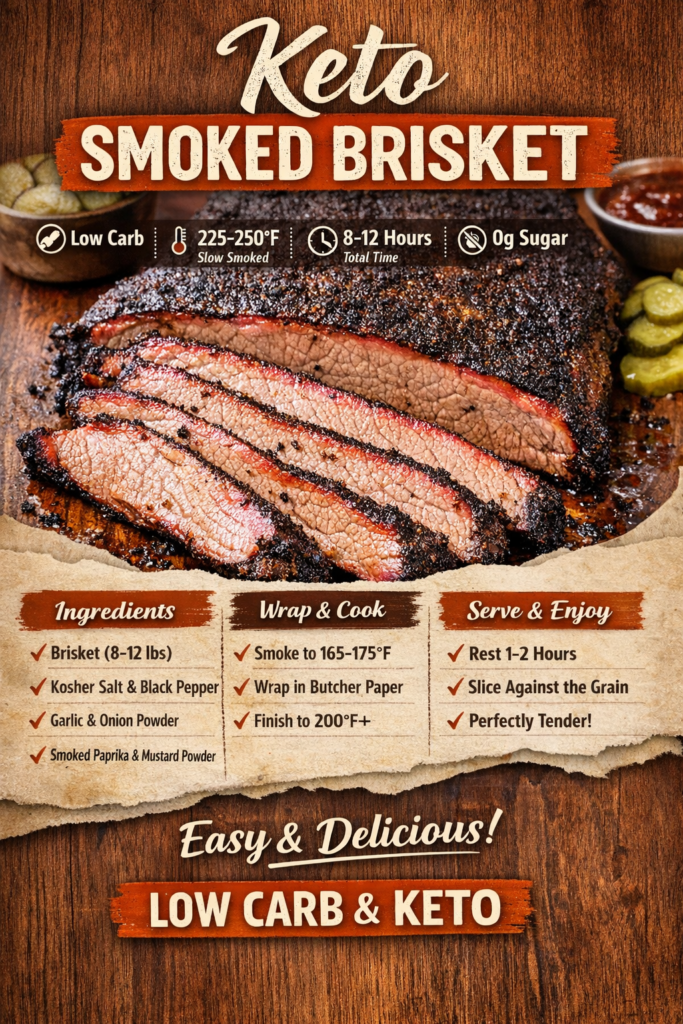
Leave Out the Sugar for a Keto Smoked Brisket
Smoked brisket is one of those classic barbecue dishes that proves simple ingredients can create incredible flavor when given enough time and care. A good brisket does not need sugar-heavy sauces or complicated rubs to stand out. For a keto-friendly approach, the focus stays on the beef itself, the smoke, and a bold, savory bark built from salt, pepper, and spices. The result is rich, satisfying, and naturally low in carbohydrates.
Brisket comes from the lower chest of the cow, which means it is a hardworking cut full of connective tissue and flavor. That toughness is exactly why low-and-slow smoking works so well. Over several hours, the fat renders, and the collagen breaks down, transforming the meat into tender slices with deep smoky character. When prepared properly, each bite gives you a balance of bark, juicy meat, and rendered fat.
One of the best things about smoked brisket is how well it fits into a keto lifestyle. There is no need for sugary barbecue sauce or sweet rubs to make it taste great. A simple seasoning blend paired with hardwood smoke builds all the flavor you need. Served with low-carb sides like roasted broccoli, cauliflower mash, or a crisp slaw without added sugar, brisket becomes a hearty meal that feels indulgent without breaking your goals.
Smoking brisket also has a ritual to it that makes it more than just dinner. There is the trimming, the seasoning, the slow build of bark, and the patience required to let the meat rest before slicing. It is a cook that rewards restraint. Rather than rushing, you let smoke, heat, and time do the work. That process is part of why brisket has become such a beloved staple for backyard cooks and barbecue fans alike.
This keto smoked brisket recipe keeps things straightforward and practical while still delivering classic barbecue flavor. It uses a savory rub, a simple binder, and a traditional smoking process that works well for a full packer brisket. Whether you are cooking for a weekend gathering or just want leftovers for several days, this is a recipe worth keeping on hand.
Shopping List
- Beef broth, 1 to 2 cups
- Brisket, 1 whole (8 to 12 pounds)
- Chili powder, 1 teaspoon
- Coarse black pepper, 2 tablespoons
- Garlic powder, 1 tablespoon
- Kosher salt, 2 tablespoons
- Mustard powder, 1 teaspoon
- Olive oil or yellow mustard, 2 tablespoons
- Onion powder, 1 tablespoon
- Smoked paprika, 2 teaspoons
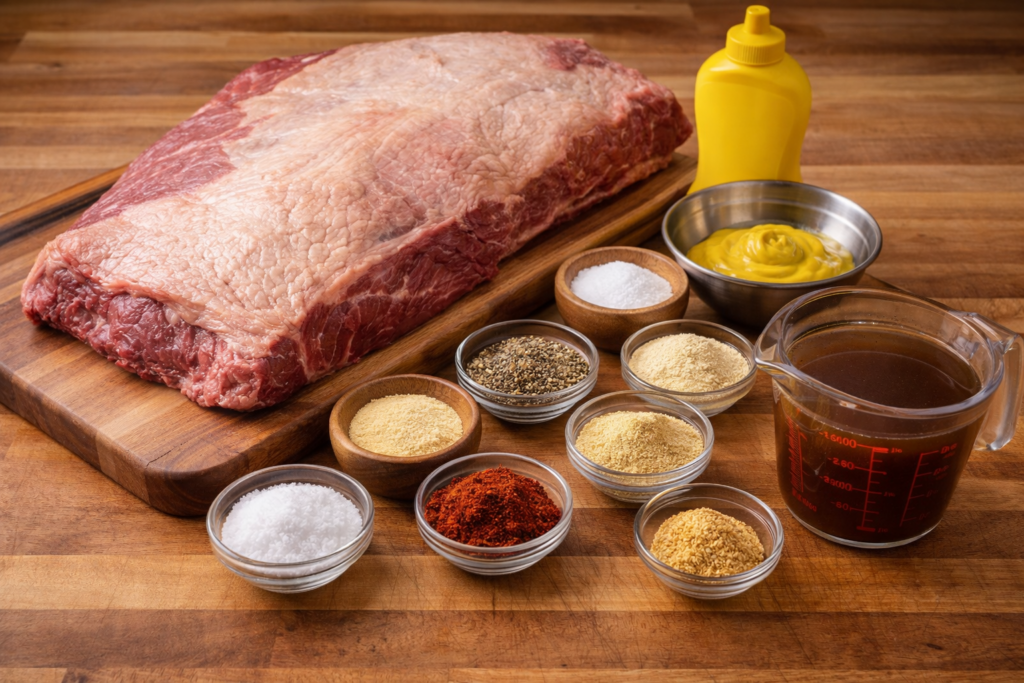
Ingredients
- 1 whole brisket, about 8 to 12 pounds
- 2 tablespoons olive oil or yellow mustard
- 2 tablespoons kosher salt
- 2 tablespoons coarse black pepper
- 1 tablespoon garlic powder
- 1 tablespoon onion powder
- 2 teaspoons smoked paprika
- 1 teaspoon chili powder
- 1 teaspoon mustard powder
- 1 to 2 cups beef broth
Cooking Instructions
- Trim the brisket by removing hard exterior fat and leaving about 1/4 inch of the softer fat cap in place. Remove any dense pockets of fat that are unlikely to render during the cook.
- Pat the brisket dry with paper towels. Rub the outside lightly with the olive oil or yellow mustard so the seasoning will adhere.
- In a bowl, combine the kosher salt, black pepper, garlic powder, onion powder, smoked paprika, chili powder, and mustard powder.
- Apply the rub evenly over the entire brisket, pressing it onto the surface so it sticks well.
- Refrigerate the seasoned brisket uncovered overnight if possible, or let it sit at room temperature for about 45 to 60 minutes before smoking.
- Preheat your smoker to 225 to 250 degrees Fahrenheit. Use hardwood such as oak, hickory, or pecan for a traditional brisket flavor.
- Place the brisket in the smoker and cook until the bark is dark and set and the internal temperature reaches about 165 to 175 degrees Fahrenheit. This usually takes several hours depending on the size of the brisket and your smoker.
- Lightly spritz with beef broth during the cook if the surface looks dry, but do not overdo it or you may soften the bark.
- Wrap the brisket in butcher paper or foil once the bark is developed. Add a small splash of beef broth before sealing the wrap.
- Return the wrapped brisket to the smoker and continue cooking until it becomes probe tender, usually around 195 to 205 degrees Fahrenheit internal temperature.
- Remove the brisket from the smoker and let it rest, still wrapped, for at least 1 hour and ideally 2 to 4 hours in a warm place.
- Slice against the grain and serve hot.
Summary
This keto smoked brisket keeps the focus on smoke, beef, and a peppery bark instead of sugary sauces or sweet rubs. It is a great choice for anyone who wants classic barbecue flavor while staying low carb. With a little patience and a steady smoker temperature, you can turn a tough cut of beef into a tender, flavorful meal that works for gatherings, meal prep, or a weekend barbecue project.
Recipe Card